


How To Make A 12V Power Supply for LED Lights?
A safe 12V power supply for LED lights should convert the available input electricity into regulated 12V DC while providing enough wattage for the complete LED load. For most lighting projects, “making” the power system means calculating the load, selecting a certified 12V LED power supply and completing the low-voltage connection—not building an AC-to-DC circuit from individual components.
Safety note: Mains-voltage wiring can cause electric shock, fire or equipment damage. The AC input side should be installed by a qualified electrician according to local electrical codes. Always disconnect the electricity before wiring or inspection.
What Does a 12V LED Power Supply Do?
Most 12V LED strips, signage modules and light-box modules cannot connect directly to an AC wall circuit. They require a power supply that converts the incoming AC voltage into stable 12V DC.
A suitable supply performs several important functions:
Converts AC input into regulated DC output
Maintains the required 12V output
Provides sufficient current for the connected LEDs
Helps limit electrical stress caused by unstable input
Supports safer operation through appropriate protection
Matches the environmental conditions of the installation
The LED label or technical specification should be checked first. A 12V DC LED product requires a 12V DC output. Connecting a 24V power supply to a 12V strip can cause immediate overheating or permanent damage.
Step 1: Calculate the LED Load
Find the rated power per meter and multiply it by the total strip length:
Total LED wattage = watts per meter × total length
For example, an 8-meter LED strip rated at 9.6W per meter requires:
9.6W × 8m = 76.8W
The power supply should not be selected at exactly 76.8W. An operating margin helps accommodate continuous use, temperature, cable losses and normal production tolerances. A common project approach is to add approximately 20% capacity:
76.8W × 1.2 = 92.16W
A 12V 100W power supply would therefore be a practical choice when its other specifications also match the installation.
Current can be calculated with:
Current = power ÷ voltage
For this example:
76.8W ÷ 12V = 6.4A
The selected supply must provide at least the required current without exceeding its rated load.
| LED strip length | Rated consumption | Calculated load | Practical supply capacity |
|---|---|---|---|
| 5m | 4.8W/m | 24W | 30W or higher |
| 5m | 9.6W/m | 48W | 60W or higher |
| 10m | 9.6W/m | 96W | 120W or higher |
| 10m | 14.4W/m | 144W | 180W or higher |
These examples are for preliminary selection. The final specification should also consider controller consumption, cable distance, installation temperature and continuous operating time.
Step 2: Choose the Correct Power Supply Type
The enclosure should match the actual installation environment.
Indoor Power Supply
An indoor model is suitable for dry, ventilated locations such as enclosed cabinets, indoor signs and protected display systems. It must remain accessible for inspection and should not be exposed to water or heavy condensation.
MINGWIN’s DI Series indoor power supplies cover 12V models from 24W to 150W, providing different capacity choices for indoor LED projects.
Rainproof Power Supply
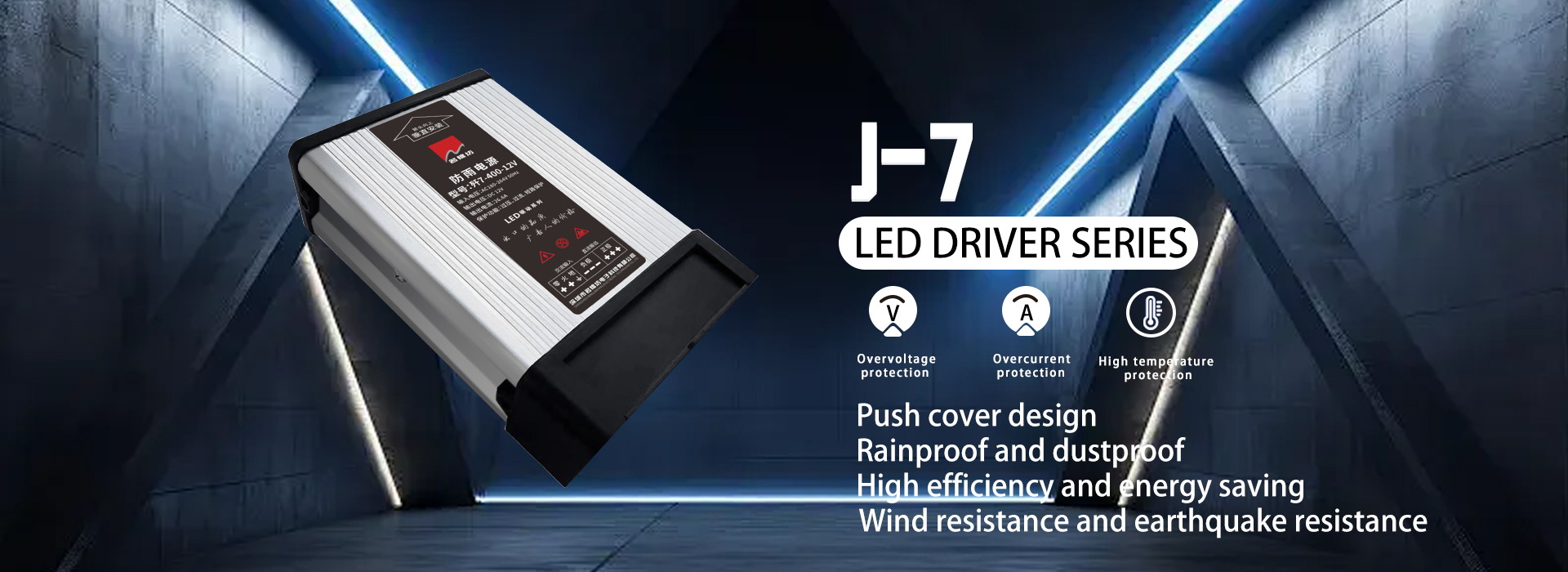
A rainproof enclosure can suit semi-exposed signage, light boxes and installations where ventilation and limited moisture protection are required. Rainproof does not mean submersible, and the mounting direction and cable-entry protection still matter.
Waterproof Power Supply
Outdoor or humid environments may require a sealed unit with stronger water and dust protection. The JL Series waterproof power supply is listed with IP67 protection and 12V or 24V options from 60W to 500W.
The complete system must be protected. A waterproof power supply cannot compensate for exposed terminals, unsuitable connectors or damaged cable joints.
Step 3: Identify the Terminals
A typical enclosed LED power supply may include:
L: AC live input
N: AC neutral input
Earth symbol: Protective grounding
V+: Positive 12V DC output
V−: Negative 12V DC output
Terminal arrangements vary, so the diagram printed on the selected model must be followed. Never connect an LED strip to the L or N terminals.
The AC side should be completed by a qualified electrician. On the low-voltage side, connect the positive LED conductor to V+ and the negative conductor to V− while the power remains disconnected.
Step 4: Select a Suitable Wire Size
Low-voltage LED systems can carry substantial current. A long or undersized cable increases resistance, causing voltage drop, heat and uneven brightness.
Wire selection should consider:
Total current
One-way cable distance
Conductor material
Installation temperature
Bundling and ventilation
Applicable electrical requirements
Long LED strips should not always be powered from only one end. Supplying power at both ends or adding correctly designed injection points can reduce dimming along the run. Multiple branches are generally connected in parallel so each branch receives 12V.
Step 5: Add the Required Controller
Single-color LED strips can often connect directly to a compatible constant-voltage supply. Dimmable, RGB, RGBW and addressable products need appropriate control equipment.
A typical RGB installation follows this sequence:
AC input → 12V power supply → RGB controller → RGB LED strip
The controller’s input voltage and current capacity must match the system. Its own consumption should also be considered during power-supply sizing.
Step 6: Test Before Final Installation
Inspect every connection before restoring power. Test the system while the wiring and power supply remain accessible.
Check whether:
The complete strip turns on.
Brightness remains consistent.
The far end becomes noticeably dim.
The controller responds correctly.
Connectors or cables become warm.
The power supply produces unusual noise.
The unit remains within a reasonable operating temperature.
Commercial signs and display systems should run for a suitable test period before the enclosure is closed. Overload and ventilation problems may not appear during a brief power-on test.
Why Is Building a Mains Power Supply from Scratch Not Recommended?
Designing an AC-to-DC switching power supply requires knowledge of isolation, transformer design, creepage and clearance distances, electromagnetic compatibility, thermal management and protection circuits. An apparently functional circuit may still present shock, fire or interference risks.
For installers and lighting businesses, the safer approach is to select a properly specified finished unit from an experienced OEM/ODM 12V LED power supply manufacturer. Custom development should be handled through controlled engineering, testing and production rather than improvised site assembly.
MINGWIN has focused on switching power supplies since 2010 and reports three factories, more than 500 employees and distribution across over 113 countries and regions. Its LED power supply product range includes indoor, rainproof, semi-filled rainproof and waterproof configurations for different project environments.
What Information Should Buyers Provide for a Custom Order?
Accurate project information helps prevent an unsuitable quotation. Buyers should provide:
Input-voltage range
Required 12V DC output
Rated wattage
LED type and total load
Indoor or outdoor environment
Expected operating hours
Enclosure dimensions
Cable and terminal requirements
Protection requirements
Label and packaging details
Order quantity
Destination market
A power supply should be selected as part of the complete LED system. Correct voltage, sufficient capacity, suitable wiring and environmental protection are all necessary for stable performance.
Final Answer
To make a dependable 12V power system for LED lights, calculate the complete LED load, add a reasonable operating margin, select a regulated 12V constant-voltage supply, use suitable wiring and test the installation before final assembly. Do not construct or connect the mains-voltage section without the required electrical expertise.
MINGWIN can evaluate the LED load, installation environment and packaging requirements to help project buyers select an appropriate indoor, rainproof or waterproof LED power supply.