


How Much Power Does Led Strip Use?
LED strip power consumption depends on the strip type, operating voltage, LED density, brightness, color configuration, and total installation length. Calculating the power correctly helps prevent flickering, voltage drop, overheating, and power supply failure.
How to Calculate LED Strip Power
The basic formula is:
Total Power = Power per Meter × Total Strip Length
For example, if an LED strip uses 9.6 watts per meter and the project requires 5 meters:
9.6 W/m × 5 m = 48 W
The LED strip will therefore require approximately 48 watts when operating at full brightness.
| Strip Power | 5-Meter Consumption | Typical Application |
|---|---|---|
| 4.8 W/m | 24 W | Decorative outlines |
| 9.6 W/m | 48 W | Cabinets and shelves |
| 14.4 W/m | 72 W | Commercial displays |
| 19.2 W/m | 96 W | High-output lighting |
These figures are general references. The actual product label or technical datasheet should always be checked before selecting a power supply.
How Voltage Affects Current
A 12V LED strip and a 24V LED strip may consume the same total wattage, but they require different current levels.
The formula is:
Current = Power ÷ Voltage
For a 48W LED strip system:
At 12V, the current is approximately 4A
At 24V, the current is approximately 2A
A 24V system can reduce current and voltage drop in longer installations. However, the power supply output voltage must always match the LED strip voltage.
Factors That Affect LED Strip Power Use
LED Density
LED strips with more LEDs per meter normally consume more electricity. They may also produce smoother and brighter illumination.
LED Type
Different LED chips have different power ratings. High-brightness LED strips generally consume more energy than low-output decorative strips.
Single Color and RGB
Single-color strips use one lighting channel. RGB strips use red, green, and blue channels, while RGBW strips include an additional white channel. Power consumption increases when multiple channels operate together.
Brightness Level
Dimming can reduce actual power use. However, power supply selection should still be based on the maximum rated wattage.
Strip Length
Longer LED strips require more power. Long installations may also need power injection at multiple points to maintain consistent brightness.
How to Choose the Power Supply Capacity
The power supply should not normally operate continuously at its maximum rated output. Leaving additional capacity improves stability and heat management.
A common planning formula is:
Required Power Supply = Total LED Load ÷ 0.8
For a 48W LED strip:
48 W ÷ 0.8 = 60 W
A compatible 60W or larger power supply would provide a practical operating margin.
Example for a Commercial Project
Consider a display shelf using four LED strips. Each strip is 3 meters long and rated at 14.4 W/m.
The total strip length is:
4 × 3 m = 12 m
The total power consumption is:
14.4 W/m × 12 m = 172.8 W
After adding operating capacity:
172.8 W ÷ 0.8 = 216 W
The project can use one suitably rated power supply or divide the load between several smaller power supplies.
Matching the Power Supply to the Environment
Power capacity is not the only factor to consider. The power supply enclosure should also match the installation environment.
Indoor LED strips can use an Indoor Power Supply in a dry and ventilated location. Shop signs, light boxes, and semi-exposed installations may require rainproof protection. Outdoor or damp environments usually require a Waterproof Power Supply.
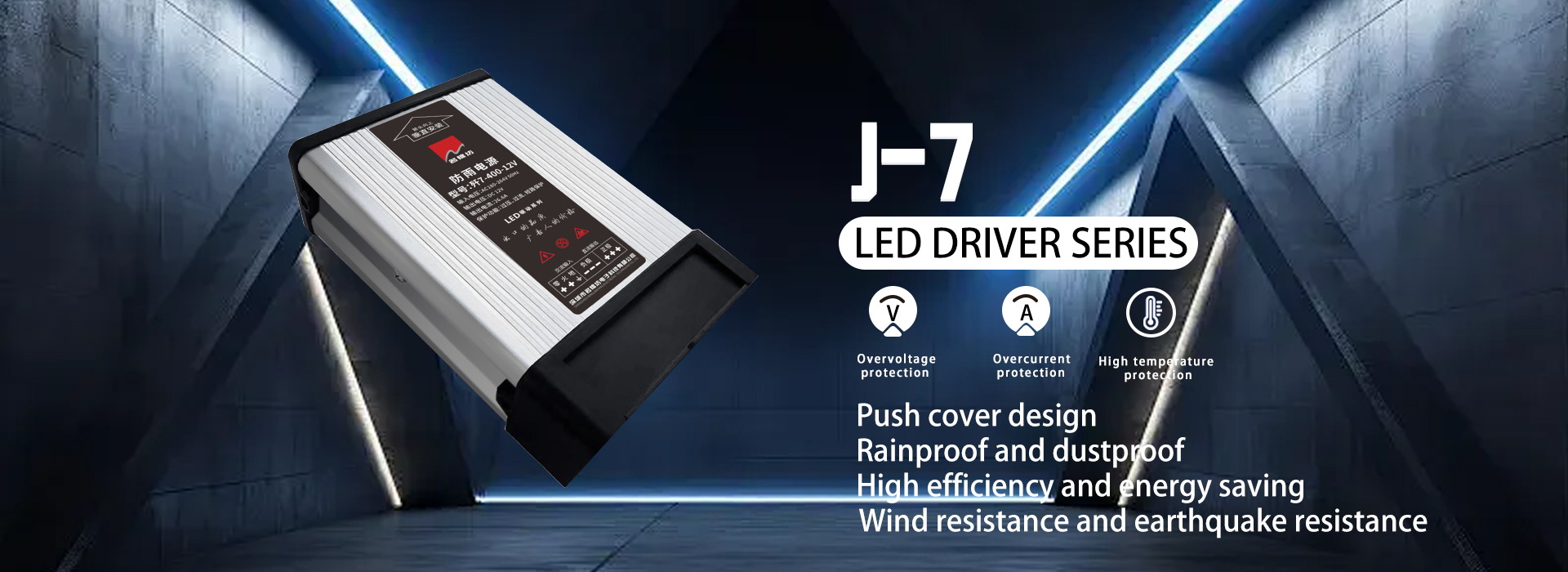
MINGJINFANG supplies indoor, rainproof, semi-filled rainproof, and waterproof LED power supplies for different lighting applications. Multiple product series are available for LED strips, signs, light boxes, and commercial lighting projects.
Information to Confirm Before Ordering
Before selecting an LED power supply, confirm:
LED strip voltage
Watts per meter
Total strip length
Maximum brightness
Cable distance
Installation temperature
Indoor or outdoor use
Controller or dimming requirements
Required power margin
Conclusion
LED strip power use is calculated by multiplying the watts per meter by the total length. The result should then be used to select a power supply with the correct voltage and sufficient capacity.
Accurate power calculation helps maintain stable brightness, reduce voltage drop, and avoid overloading. For project orders, providing the strip voltage, total wattage, installation environment, and required quantity allows the supplier to recommend a more suitable LED power solution.