


Do Businesses Supply Power To Their Own Parking Lot Lighting?
In many cases, yes. Businesses usually do supply and pay for the power used by their own parking lot lighting, especially when they own the property or directly manage the site lighting system. But the full answer is not always that simple. In some projects, the landlord controls the common-area lighting. In others, the utility may provide an outdoor lighting service for a monthly fee. That is why this question matters to more than property owners. It also matters to contractors, distributors, project buyers, and wholesale customers who need to choose the right power solution behind the lighting system.
For most commercial parking lot projects, the real issue is not only who pays the electric bill. It is also how the system is powered, how stable that power is, and whether the power supply can handle outdoor or semi-exposed conditions over time. A parking lot light may look strong from the outside, but if the power supply is poorly matched or poorly protected, the whole system can become unreliable. That is why the power side of parking lot lighting deserves more attention than it often gets.
Why Businesses Usually Handle Parking Lot Lighting Power
When a business owns its site or operates under a lease that makes it responsible for exterior utilities, parking lot lighting is normally part of that operating cost. The lights are installed to improve visibility, support safety, and help the site remain usable after dark. In practical terms, that means the business usually covers the electricity one way or another, either directly through its own meter or indirectly through rent, common-area charges, or a service agreement.
This is where many buyers start thinking about more than fixtures alone. They begin asking what kind of power supply is suitable for long runtime, weather exposure, and stable performance. That is a much better question, because parking lot lighting is rarely a short-use product. It often runs for long evening hours, and it needs to keep working through changing outdoor conditions. In this kind of environment, the power supply is not a minor accessory. It is part of the reliability of the whole lighting setup.
Why The Power Side Matters So Much In Outdoor Lighting
Parking lot lighting is expected to work consistently. If the light output becomes unstable, if the unit fails in damp conditions, or if maintenance becomes too frequent, the cost of the system rises quickly. That creates pressure not only for the property owner, but also for contractors, importers, and supply partners responsible for recommending the product in the first place.
This is why outdoor lighting projects often need more than a basic indoor driver. A parking lot or exterior lighting environment may involve moisture, temperature changes, dust, and long operating hours. A power solution used in this kind of setting should be selected with the installation conditions in mind, not only by wattage. Buyers who ignore this often end up with avoidable failures and more after-sales trouble.
Why Rainproof Power Supply Fits Parking Lot Lighting Better
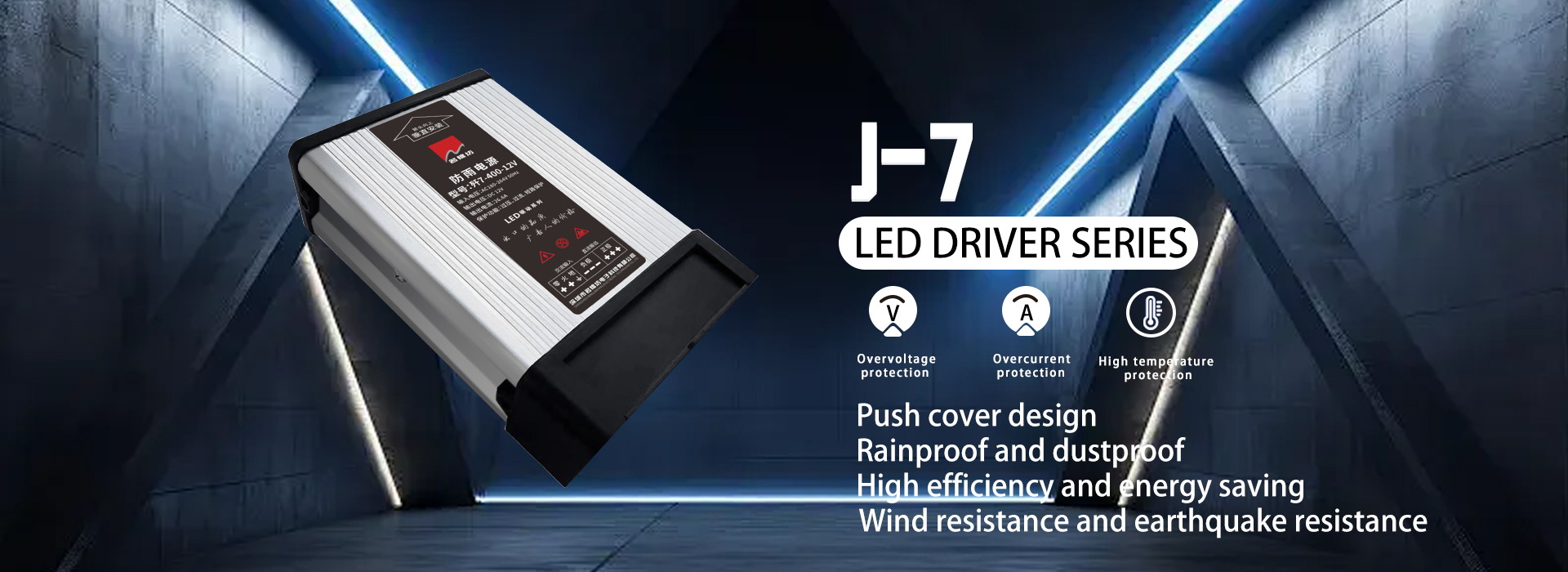
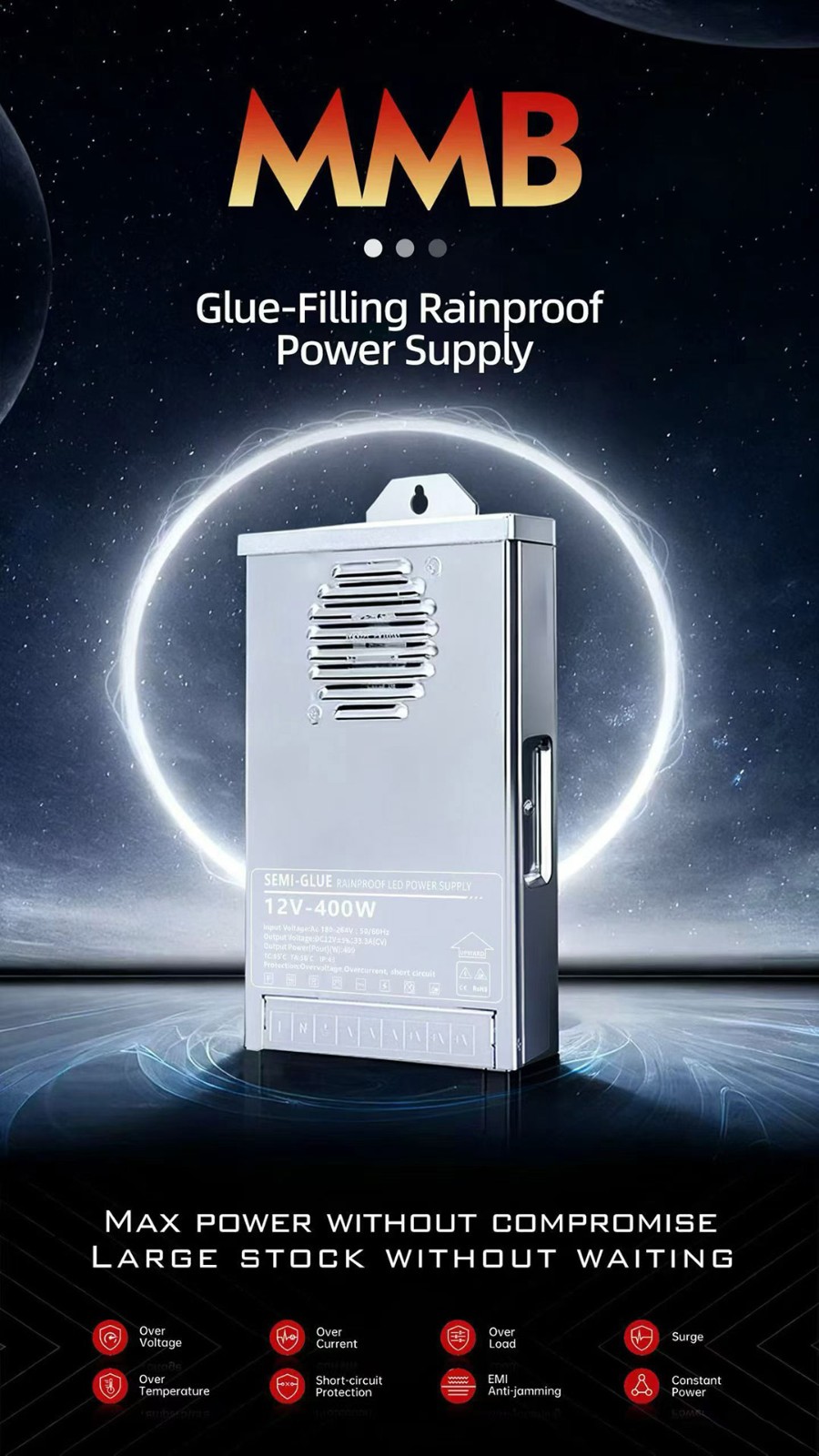
Our product connects naturally to this topic because it is a semi-filling glue rainproof power supply designed for LED lighting applications where extra environmental protection matters. For parking lot lighting, this matters because the power unit may be installed in a semi-exposed or outdoor-related setting where indoor-use products are not the best choice. A rainproof structure can help improve practical reliability in these conditions and support a more stable lighting system over time.
For B-end buyers, this is where product value becomes easier to explain. A business customer may not ask first about the internal power component, but they do care about whether the lot lights stay on, whether maintenance calls stay low, and whether the overall system feels dependable. That is why wholesalers, project buyers, and OEM customers often pay close attention to power supply selection even when the end user sees only the fixture.
Why Businesses Sometimes Do Not Power It Themselves
There are also exceptions. In some commercial properties, especially shared sites, shopping centers, or leased locations, the parking lot lighting may be handled by the landlord or through common-area utility arrangements. In some markets, utilities also offer outdoor lighting services where the customer pays a recurring fee instead of owning every part of the system directly. In that kind of model, the business still pays in some form, but not always through a self-owned lighting setup.
This is an important distinction for procurement teams. The question is not always ownership alone. It is responsibility. Who is responsible for the energy cost, maintenance, replacement, and long-term system performance. Once that is clear, the buyer can make better decisions about fixtures, drivers, and power supply structure.
Why B-End Buyers Care About More Than Cost
For professional buyers, the real pain point is rarely just the purchase price. It is lifecycle cost. A weak power supply may look cheaper at first, but if it causes downtime, flicker, moisture-related failure, or inconsistent output, the total project cost rises later. Parking lot lighting is directly tied to safety, visibility, and site image, so failure is more noticeable than in many indoor applications.
That is why buyers working in commercial lighting supply usually think in a broader way. They care about whether the power solution suits outdoor use, whether it can support repeat bulk orders with stable quality, and whether the supplier can help them choose the right range for the application. A reliable supplier can reduce mismatch risk and make the whole sourcing process more efficient.
Why Supplier Capability Matters In Commercial Projects
A parking lot lighting power supply is not just a piece of hardware. It is part of a commercial system that needs stable delivery, repeatable quality, and practical support. This is especially true in wholesale, project, and OEM business. Buyers need more than a catalog. They need a supplier that understands where the product will be used and what kind of installation pressure it will face.
Our product line fits this kind of demand because it sits inside a broader LED power supply solution range. That gives buyers more room to match power products with different lighting applications instead of forcing one standard option into every project. For distributors and project customers, that flexibility is useful because parking lot lighting needs can vary from one installation to another.
How To Think About Parking Lot Lighting Power More Practically
The best way to answer this topic is to move past the surface-level question. Yes, many businesses do supply power to their own parking lot lighting. But the better question is whether the system behind that lighting is built for long-term use. When the power supply is chosen correctly, the lighting system becomes more dependable. When it is chosen only by price, problems usually show up later.
For buyers in commercial lighting, this is where sourcing becomes a quality decision, not just a buying decision. The right rainproof power supply can help support a more stable outdoor lighting setup, reduce maintenance pressure, and make the final solution easier to trust.
Conclusion
So, do businesses supply power to their own parking lot lighting? In many cases, yes. Businesses commonly pay for that lighting directly or indirectly, especially when they own the site or are responsible for exterior utility costs. In some cases, landlords or utility service programs handle the setup instead. But no matter who carries the bill, the reliability of the power system still matters.
That is why rainproof power supply selection deserves a serious place in parking lot lighting projects. A suitable power unit helps keep the system stable, supports outdoor use more confidently, and reduces the risk of avoidable service issues later. If you are planning a parking lot lighting project or reviewing power supply options for wholesale, OEM, or project supply, contact us with your voltage, wattage, and installation details. We can help you sort out a more suitable solution and make your next sourcing decision more practical from the start.