


What Power Supply Do I Need for Led Strip Lights?
Choosing the right power supply for LED strip lights is the difference between a clean, reliable installation and problems like flicker, dim ends, overheating connectors, or early strip failure. The correct choice is not based on guesswork. You match voltage first, then size wattage with a safety margin, and finally select the right power supply format for your environment and control method. This guide explains the full selection process in a practical way, including examples, wiring considerations, and common mistakes.
To explore power and lighting supply options for different installation needs, visit the MJF products range.
Start With Two Critical Numbers: Voltage And Wattage
Match The Strip Voltage Exactly
Most LED strip lights are constant-voltage products, commonly:
12V DC
24V DC
Your power supply output must match the strip voltage. A higher-voltage supply can damage the strip. A lower-voltage supply can cause dim lighting or no lighting. Always check the strip label, specification sheet, or printing on the strip PCB before purchasing a driver.
Calculate Total Wattage From The Strip Rating
LED strips are rated by power consumption, often expressed as watts per meter or watts per foot. To calculate:
Total watts = strip watts per meter × total meters used
If you are using multiple runs, add the wattage for all runs connected to the same power supply.
Add A Safety Margin For Reliable Operation
A power supply should not run at its maximum rating continuously, especially in warm cabinets or enclosed spaces. A safety margin helps keep temperatures lower and improves long-term stability.
A common sizing rule:
Required PSU wattage = total strip watts ÷ 0.8
This plans for about 80 percent loading. If your installation is in a hot environment or runs many hours per day, using a larger margin is even more conservative.
A Simple Example Calculation
If your LED strip is 12W per meter and you are installing 6 meters:
Total watts = 12W × 6 = 72W
With 80 percent loading: 72 ÷ 0.8 = 90W
In this case, a 12V power supply rated around 90W or higher is a practical selection.
Consider The Strip Type And Control Method
Single-Color Constant-Voltage Strips
These typically connect directly to the power supply output. You mainly need correct voltage and wattage, plus appropriate wiring and connectors.
RGB And RGBW Strips
These usually require a controller between the power supply and the strip. The power supply still needs to match voltage and total wattage, but you also confirm:
Controller voltage compatibility
Controller current capacity per channel
Addressable LED Strips
Addressable strips often use 5V, 12V, or other configurations and require a controller plus a suitable power supply. In addition to power sizing, you may need:
Power injection planning for long runs
Stable grounding between power supply and controller
Correct data line connection
If you are unsure, confirm the strip’s voltage and whether it is constant-voltage or addressable before selecting the driver.
Choose The Right Power Supply Style For Your Installation
Power supplies are not one-size-fits-all. Selection depends on location, protection needs, and wiring method.
Common power supply formats:
Plug-in adapters for small indoor installations
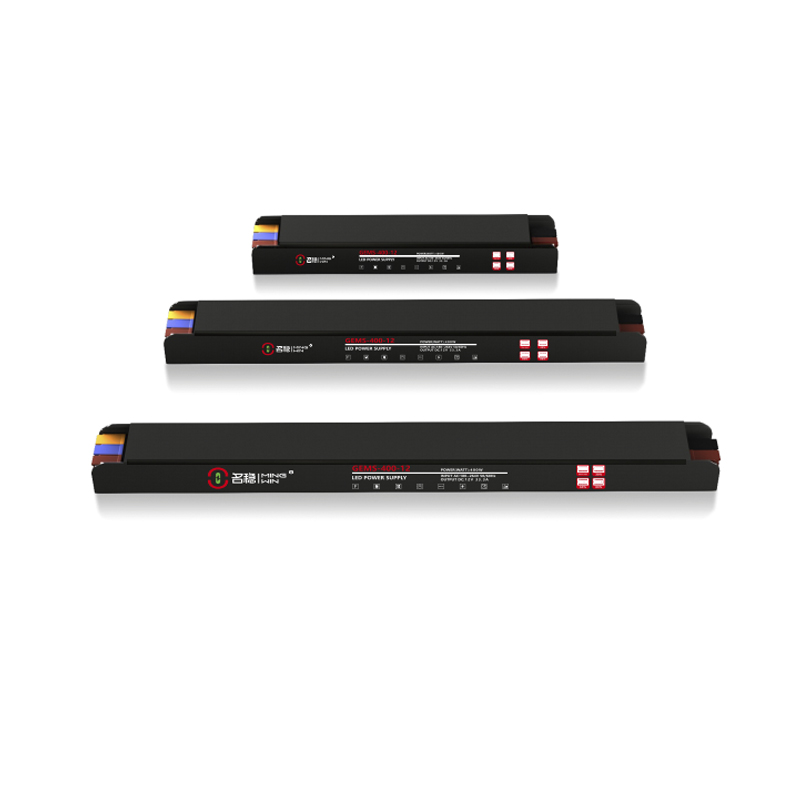
Enclosed drivers for cabinet, cove, and architectural lighting
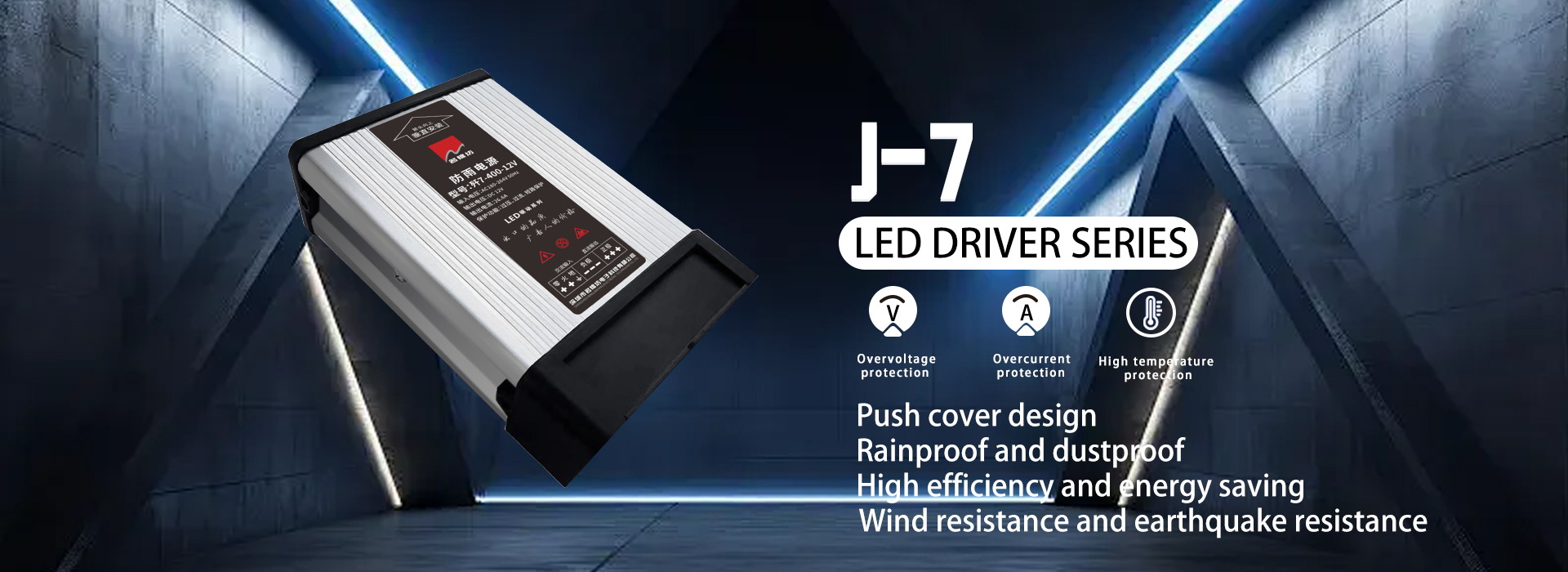
Waterproof power supplies for damp locations or outdoor-rated systems
DIN-rail or industrial supplies for control panels and large projects
If the power supply is installed in a hidden space, ventilation and service access become important. Overheating is often caused by placing a driver in an unventilated enclosure.
Plan For Voltage Drop On Long Runs
Even with a correctly sized power supply, long LED strip runs can dim at the far end due to voltage drop. This is not a driver defect; it is a wiring and distance issue.
To reduce voltage drop:
Use 24V strips when possible for longer lines
Feed power from both ends of the strip
Inject power at intervals for long runs
Use thicker gauge wire for longer distances between driver and strip
Avoid excessive daisy-chaining of strip sections
If you want consistent brightness across a long installation, power distribution planning is as important as power supply sizing.
Verify Output Current And Connection Capacity
Power supplies are rated in volts and watts, and you can also express capability as current.
Current calculation:
Current (A) = Watts (W) ÷ Volts (V)
Example:
96W at 24V equals 4A
Make sure your connectors, wires, and controllers can handle the expected current. Undersized wire can cause heating and additional voltage drop.
Quick Selection Table For LED Strip Power Supplies
| What You Need To Know | Why It Matters | What To Choose |
|---|---|---|
| Strip voltage (12V or 24V) | Prevents failure and dimming | PSU output must match exactly |
| Total strip wattage | Prevents overload shutdown | Total watts for all connected strips |
| Safety margin | Improves stability and lifespan | Choose PSU with extra capacity |
| Installation environment | Prevents moisture and heat issues | Indoor, enclosed, or waterproof PSU |
| Run length | Controls dimming at far end | Plan injection or use 24V systems |
| Control type | Ensures compatibility | Controller-rated PSU for RGB or addressable |
Common Power Supply Mistakes To Avoid
Selecting the wrong voltage
This is the fastest way to damage strips or create unstable lighting.Choosing a PSU with no safety margin
Overloaded drivers run hotter and can cause flicker or early failure.Ignoring heat and ventilation
Even a quality PSU can shut down if installed in a sealed, hot space.Forgetting voltage drop
A bigger power supply does not fix dim ends if the wiring plan is poor.Using thin wire for long distances
Thin wire increases voltage drop and can create heating at connectors.
How To Share Your Requirements For Accurate Recommendation
If you want a precise power supply recommendation, provide:
Strip voltage and type (single color, RGB, RGBW, addressable)
Wattage per meter and total length
Number of runs and how they will be connected
Indoor or damp location requirement
Whether dimming or controller control is required
This information allows a solution provider to recommend not only the driver, but the wiring and power distribution layout.
Conclusion
The power supply you need for LED strip lights depends on three essentials: matching voltage, sizing wattage with a safe operating margin, and selecting a power supply format that fits your installation environment and control system. For longer runs, plan for voltage drop with thicker wiring and power injection rather than simply buying a higher-wattage driver.
To explore LED power and lighting supply solutions, visit the MJF products range. If you share your strip voltage, wattage per meter, total length, and installation conditions, MJF can help you confirm the right driver size and a practical wiring plan for stable, consistent lighting performance.
Previous: