


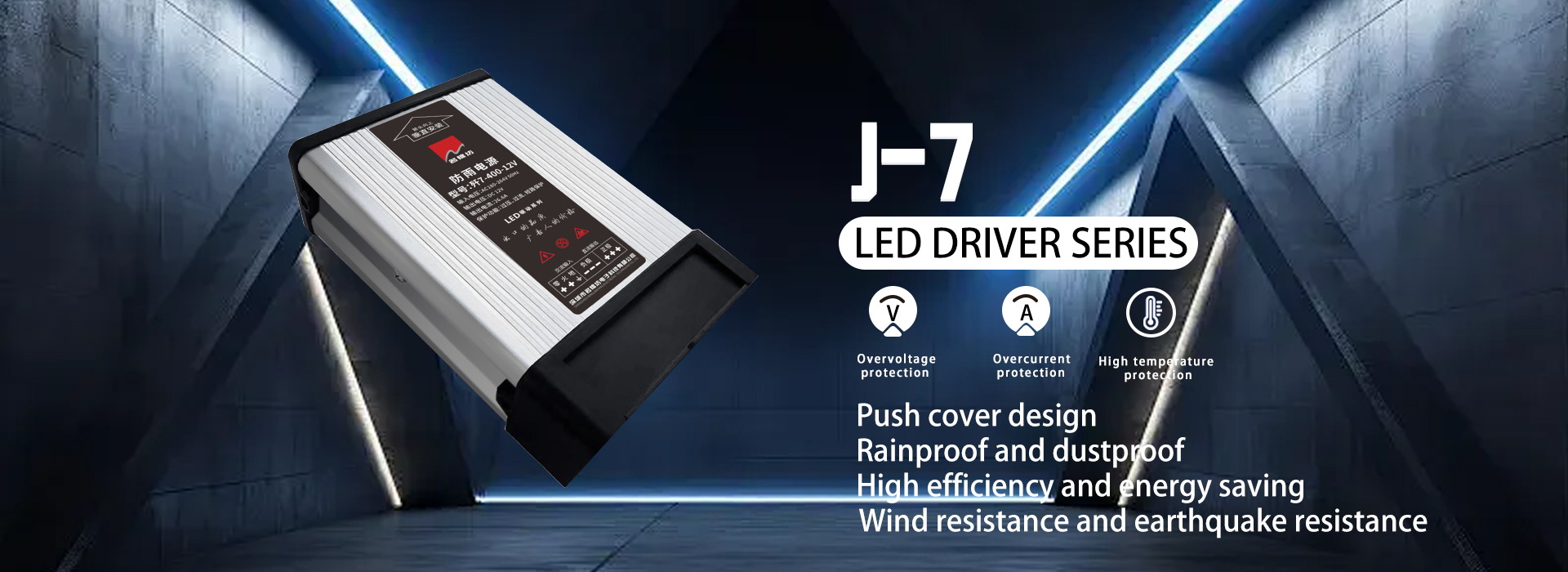
How to Make a Power Supply for LED Lights?
Making a power supply for LED lights means converting incoming AC mains or DC input into a stable, efficient output that matches the LED load. For real projects, it is not only about getting the right voltage. A dependable LED power supply must manage current, heat, electrical noise, surge events, and long runtime stability. That is why many LED manufacturers and project contractors choose professional, production-ready drivers instead of attempting a custom build from scratch.
This article explains how LED power supplies are made in engineering terms, what design decisions matter most, how to calculate the right output, and how to verify quality for indoor and outdoor LED applications. If you are sourcing finished drivers for projects, you can review MJF’s LED driver options here: LED power supply products.

Step 1: Decide What Type of LED Power Supply You Are Making
The first decision determines the entire circuit structure and testing plan.
Constant voltage power supplies are commonly used for LED strips, rigid bars, and modules that already include current limiting. Typical outputs are 12V or 24V DC. This is the most common setup for architectural lines and signage lighting.
Constant current LED drivers are used when the LED load requires controlled current, such as many high-power LED modules. The driver sets output current and adjusts voltage as needed within a range.
If your LED product documentation specifies only voltage input, it usually expects a constant voltage supply. If it specifies a current rating and a voltage range, it likely needs constant current control.
Step 2: Define Input Conditions and Safety Requirements
A power supply cannot be designed correctly without defining its working environment.
Key input and compliance considerations:
Input voltage range and frequency, especially if the product will ship to multiple regions
Surge and transient expectations, common in outdoor and industrial installations
Operating temperature range and ventilation conditions
Class I or Class II insulation structure expectations depending on market and application
Waterproof or rainproof needs for outdoor lighting, signage, or wet environments
In commercial LED projects, failures often come from underestimating surge exposure, heat buildup, or moisture ingress rather than from LED load calculations.
Step 3: Choose the Core Topology and Control Method
Most LED power supplies follow a similar internal architecture:
Input protection and EMI filtering to reduce noise and improve stability
Rectification and primary switching stage to convert and regulate power efficiently
Transformer or isolation stage depending on safety design
Secondary rectification and smoothing to produce stable DC
Feedback control loop for regulation under changing load and temperature
This is the stage where component quality and thermal design determine whether the unit remains stable for long-term operation.
Step 4: Calculate Output Requirements for LED Loads
Correct sizing reduces heat stress and extends service life.
For constant voltage LED systems
You typically size by wattage. Add up the power consumption of all LED strips or modules, then add headroom.
A practical sizing approach:
Total LED load wattage = sum of all segments
Recommended PSU capacity = total load wattage divided by a safe loading factor
A commonly used loading factor is to avoid running at maximum continuously. That margin helps reduce temperature rise and improves stability over long runtime.
For constant current LED systems
You size by required output current and voltage range. The driver must provide the correct current rating and support the LED string voltage at operating temperature.
Step 5: Build for Heat Dissipation and Long Runtime Stability
Heat is one of the biggest reasons LED power supplies degrade early.
Thermal stability is influenced by:
Component selection, especially capacitors, MOSFETs, and rectifiers
Enclosure design and material
Potting and sealing methods for waterproof units
Internal spacing and airflow design for indoor units
Outdoor drivers also need moisture protection without trapping humidity in a way that accelerates condensation-related corrosion. A well-designed waterproof unit balances sealing and internal stability.
MJF supplies multiple driver formats including indoor and waterproof options in its LED power supply products range, which supports different installation environments.
Step 6: Add Protection Features That Prevent Field Failures
An LED power supply designed for real projects should include layered protections, not just basic regulation.
Common protections that matter:
Over-voltage protection to prevent damage from regulation faults
Over-current protection to handle load issues and wiring mistakes
Short-circuit protection for installation errors
Over-temperature protection to prevent thermal runaway
Surge protection strategies for outdoor installations and unstable grids
Protection design is a major difference between hobby-grade supplies and long-term commercial drivers.
Step 7: Waterproofing Strategy for Outdoor LED Power Supplies
For outdoor LED lighting, waterproof design is not only about sealing the case. Most water entry occurs at cable exits and seam gaps.
A practical waterproof build strategy includes:
Sealed housing with reliable compression structure
Cable glands matched to cable jacket size
Strain relief to prevent movement from weakening seals
Potting or internal sealing methods that block moisture paths
Corrosion resistance for long-term exposure in humid or coastal environments
If your LED project involves rain exposure, signage cabinets, or wash-down areas, choosing a purpose-built waterproof driver usually lowers risk compared with retrofitting an indoor unit.
Step 8: Testing and Quality Checks Before Shipping
A production-ready LED power supply must be validated beyond basic output checks.
Common verification points:
Load test across the rated output range
Stability check for flicker or output ripple under changing loads
Temperature rise test under continuous operation
Functional protection tests for short-circuit and overload behavior
Waterproof verification for outdoor-rated enclosures
Aging or burn-in testing for stability screening
These tests help prevent issues that appear only after weeks of continuous runtime.
Quick Reference: What to Specify When Sourcing LED Power Supplies
| What You Need to Specify | Why It Matters | What to Prepare |
|---|---|---|
| Constant voltage or constant current | Determines driver type | LED load data sheet |
| Output voltage and power or output current range | Prevents mismatch and overheating | Total load and wiring plan |
| Installation environment | Defines waterproof and thermal needs | Indoor or outdoor location details |
| Input region requirements | Ensures compatibility | Market and grid condition notes |
| Cable and mounting constraints | Impacts reliability | Space and enclosure layout |
If you provide these details to a supplier, selection becomes faster and the risk of mismatch drops significantly.
Why Many LED Projects Prefer a Finished Driver Instead of DIY
Making an LED power supply is possible at the engineering level, but manufacturing a stable driver that performs consistently across environments requires component supply control, process discipline, and repeatable testing. For most lighting brands, contractors, and distributors, the better business outcome is choosing a professional driver line that already covers indoor, rainproof, and waterproof scenarios.
MJF positions itself as a one-stop LED power supply solution provider, with a large operational scale and global distribution coverage, supporting long-term supply needs for LED projects across different regions. You can view available models here: LED power supply products.
Conclusion
To make a power supply for LED lights, you must first choose constant voltage or constant current architecture, define input and environment requirements, design the conversion and control stages, build strong thermal and protection features, and validate performance with real load and temperature testing. In practical LED projects, long service life depends more on heat management, protection design, and consistent production testing than on nominal voltage alone.
For project-ready LED drivers that cover indoor and outdoor use cases, explore MJF’s LED power supply products to select models that match your LED load and installation conditions.