


How To Calculate Power Supply for LED Lights
Choosing the right power supply for LED lights is one of the most important steps in any lighting project. LEDs are efficient, long-lasting, and adaptable, but they rely heavily on clean, stable power. Undersized power supplies cause flickering, dimming, or premature failure, while oversized units may increase cost and thermal load unnecessarily. The key is knowing how to calculate the correct wattage, voltage, and current requirements from the LED specifications. Once you understand these relationships, selecting a stable and safe power source—such as professional units from MINGJINFANG’s MINGJINFANG LED power supply solutions—becomes straightforward. This guide explains the process clearly so you can make accurate and reliable decisions for any LED lighting setup.
1. Understanding the Basic Electrical Requirements of LED Lighting
Before calculating the appropriate power supply, it is essential to understand the electrical characteristics of LEDs. LED lighting systems operate on direct current (DC), meaning they require a power supply that converts standard AC household voltage into a usable lower DC voltage. Most LED strips, modules, or fixtures are designed for 12V or 24V DC operation, although some industrial systems use specialized voltages.
Unlike incandescent bulbs, LEDs do not self-limit current. They must receive the correct voltage and controlled current to operate safely. Too much current overheats the LED chip, while too little reduces brightness and efficiency. A stable power supply ensures the LED receives consistent energy throughout its lifespan.
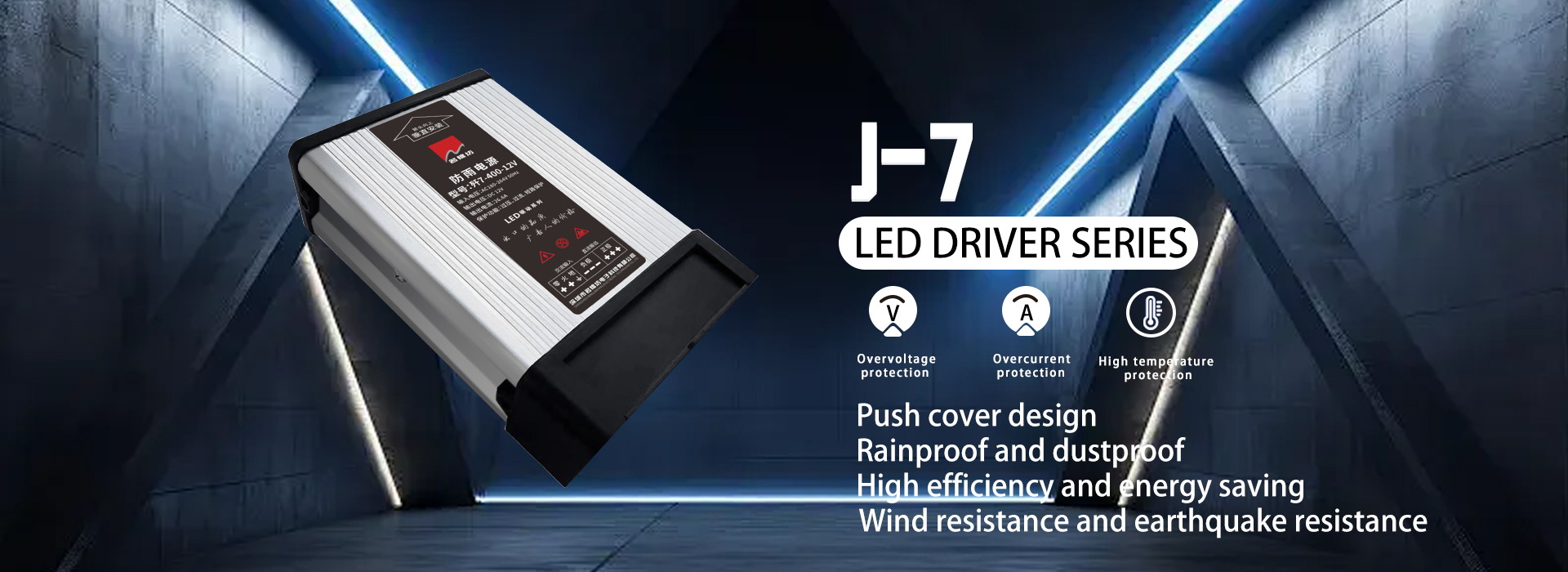
Understanding these basic electrical behaviors sets the foundation for calculating power needs accurately. Once voltage is confirmed, you can determine how many LEDs will run on the circuit and how much wattage the system will draw. Reliable power supplies, such as those from the MINGJINFANG LED power supply solutions, are engineered to maintain proper voltage and current under varying load conditions, preventing instability or premature burnout.
2. Calculating Wattage: The Core Formula for Power Planning
Once the voltage specification is known, the next step is calculating how much wattage the power supply must provide. LED lighting products always list their wattage, either by meter, module, or individual light source. The rule for calculating total power consumption is straightforward:
Total Wattage = LED Wattage per Unit × Number of Units
For example, if a 12V LED strip consumes 14.4W per meter and the installation uses 5 meters:
Total Wattage = 14.4W × 5 = 72W
This calculation applies across other LED formats as well, whether for modules, panels, or single-chip designs. When using multiple types of LEDs in one project, calculate their wattage separately and sum them at the end.
Below is a quick reference table summarizing typical consumption values:
| LED Type | Typical Wattage | Notes |
|---|---|---|
| 12V LED strip (5050 type) | 14–18W/m | Depends on density |
| 24V LED strip (COB type) | 10–16W/m | Higher uniformity |
| LED modules | 0.7–2W each | Signage and lightboxes |
| LED panels | 20–40W per unit | Varies by size |
| High-power LEDs | 1–3W each | Used in spotlights |
With total wattage calculated, the next step is determining the correct power supply rating. It is never recommended to size the power supply at exactly the system’s wattage. Instead, an additional safety percentage is added to ensure stability and long-term performance.
This leads directly into selecting the proper power margin.
3. Adding a Safety Margin: Why Extra Capacity Matters
LED power systems must remain stable under different conditions, including voltage changes, temperature shifts, and varying load demands. If a power supply operates at full capacity constantly, it deteriorates more quickly, generates excess heat, and risks shutting down.
The general recommendation is to add 20%–30% extra capacity beyond the total LED wattage. This ensures the power supply is not overstressed and supports long-term reliability.
Example Calculation with Safety Margin
Continuing the earlier example of a 72W LED strip installation:
Total LED wattage: 72W
Recommended margin: 30%
Final power supply requirement:
72W × 1.3 = 93.6W
→ Round up to a 100W power supply.
The same method applies regardless of LED type or voltage. Choosing a slightly larger power supply also ensures smooth performance during brightness peaks, color changes (for RGB lighting), and initial startup surges.
High-quality power supply units—such as those in the MINGJINFANG LED power supply solutions—are designed with robust internal components to handle these variations. Even with built-in protections, proper sizing significantly enhances both LED and power supply lifespan.
4. Voltage, Current, and Compatibility: Ensuring the System Matches Correctly
Beyond wattage calculation, compatibility across voltage and current is essential. LEDs must receive the correct DC output from the power supply. Using the wrong voltage can permanently damage the LEDs, while insufficient current prevents them from achieving their full brightness.
Matching Voltage
Always match the power supply voltage to the LED voltage:
12V power supply → 12V LEDs
24V power supply → 24V LEDs
Mixing these values is a common cause of LED failure.
Understanding Current Requirements
Current (measured in amps) is calculated using:
Current (A) = Wattage (W) ÷ Voltage (V)
If a system consumes 72W at 12V:
72W ÷ 12V = 6A
The chosen power supply must therefore provide at least 6A, ideally with a 20%–30% margin:
6A × 1.3 ≈ 7.8A → Choose a 12V, 8A supply
For large installations, the system may require multiple circuits or multiple power supplies to distribute current properly. LED panels, for example, often include dedicated power inputs to ensure even current flow.
MINGJINFANG’s MINGJINFANG LED power supply solutions include various voltage and current combinations designed specifically for this compatibility, making system matching simpler and more reliable.
5. Accounting for Installation Conditions and Load Distribution
Real-world installations require additional considerations beyond pure electrical calculations. Cable length, ambient temperature, dimming behavior, and the physical layout of LEDs all affect power performance.
Long cable runs, for example, result in voltage drop. This reduces brightness at the end of the line and can cause inconsistent illumination. Increasing cable thickness or using shorter distances between the supply and the LEDs helps solve this. In multi-panel or multi-strip projects, power injection points may be necessary to maintain uniform voltage.
Environmental conditions also influence power supply selection. Enclosed spaces with poor ventilation require power supplies with higher efficiency or external heat dissipation. Outdoor installations require waterproof ratings, surge protection, and wider operating temperature tolerances.
The arrangement of the LEDs is another factor. One long continuous chain behaves differently from several parallel shorter ones. In parallel setups, total amperage increases while voltage remains constant. In series setups, voltage increases but current stays constant—though LED strips are rarely installed in true series due to voltage limitations.
Choosing a dependable power supply ensures these real-world variables do not compromise the lighting system. Units from MINGJINFANG LED power supply solutions are designed to maintain stable output even under challenging installation conditions.
6. Choosing the Right LED Power Supply for Optimal Performance
Once wattage, voltage, current, and environmental factors are calculated, selecting the appropriate power supply becomes much easier. The ideal unit should combine electrical compatibility, efficiency, thermal reliability, and protection features.
Key Factors When Selecting a Power Supply
A reliable LED power supply should include:
Sufficient wattage capacity with safety margin
Correct voltage output (usually 12V or 24V)
Overload, short-circuit, and over-temperature protection
High efficiency to reduce heat
Stable output for flicker-free LED performance
Compatibility with dimmers, if needed
Selecting a low-quality power supply can lead to flickering, unstable brightness, or even LED damage. A well-designed unit ensures smooth operation regardless of usage intensity or environmental conditions.
MINGJINFANG’s MINGJINFANG LED power supply solutions include models designed for signage lighting, architectural illumination, strip systems, and industrial LED applications. Their designs emphasize stable voltage output, high durability, and long-term performance—qualities essential for both small lighting projects and large-scale installation work.
Summary
Calculating the correct power supply for LED lights involves understanding voltage requirements, adding total wattage, applying a 20–30% safety margin, and confirming current compatibility. Real-world factors such as cable length, dimming systems, environmental conditions, and installation layout also influence the final choice. A properly calculated power supply ensures LEDs operate safely, efficiently, and with maximum lifespan. By selecting a reliable power source—such as those available from MINGJINFANG LED power supply solutions—you guarantee stable illumination and long-term performance for any LED lighting system.